
Seline vs Plausible: Which Fits SaaS? (2026)
Seline
Is Google Analytics slowing decisions with complex reports and cookie banners. Many SaaS teams want clean realtime data without privacy risk.
Seline vs Plausible is the shortlist for privacy-first Google Analytics alternatives. Seline scores 4.6/5 in this hands-on trial of public demo/docs for realtime insights plus revenue attribution.
Quick verdict: Seline Tier 1 at $59 one-time suits SaaS teams needing revenue attribution, journeys and funnels, while Plausible from $14/mo suits blogs and agencies needing open-source simplicity.
This article will cover
- Side-by-side snapshot of Seline vs Plausible
- What each platform does best
- Feature comparison across dashboard, journeys, funnels and privacy
- Pricing face-off with break-even math
- Final verdict by use case and FAQs
Get the Seline lifetime deal while Tier 1 remains at $59 for 25,000 monthly events with 3-year retention.
Seline vs Plausible at a Glance
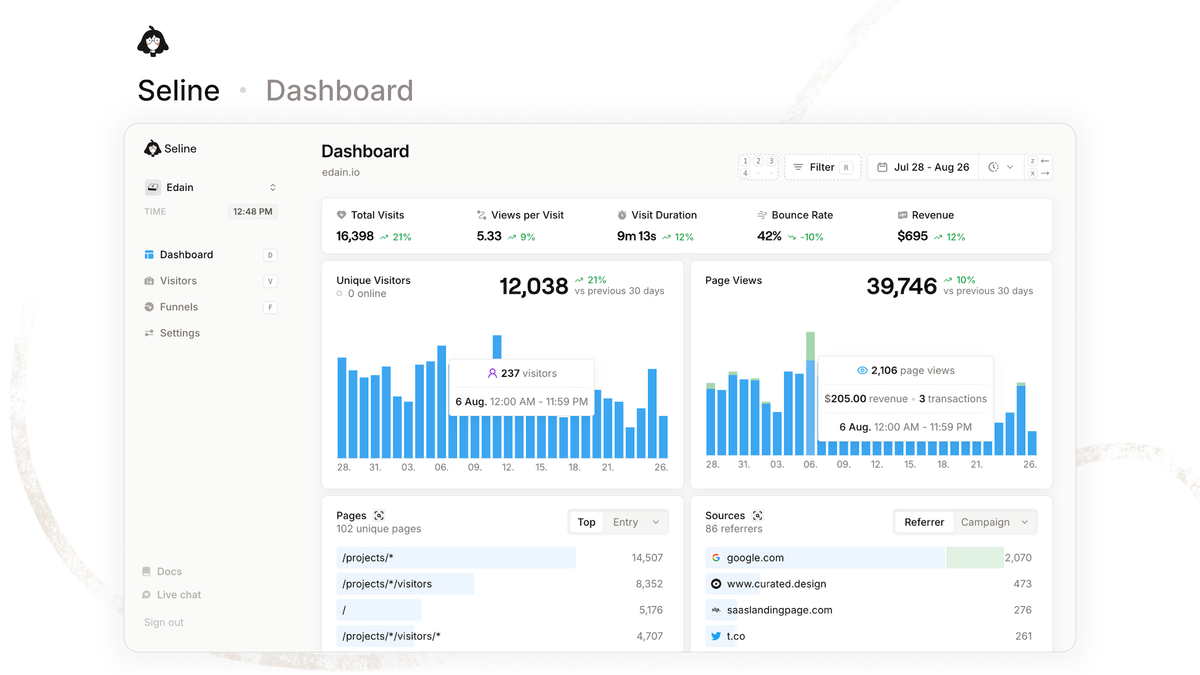
The snapshot shows the core trade-off. Seline combines privacy analytics with product and revenue data. Plausible keeps analytics minimal, fast and open-source.
Seline was founded by Kostya Nesterovich in Poland in July 2024. It targets SaaS teams that need to connect traffic to trials, subscriptions and churn. Plausible is an established open-source project focused on simple pageview analytics with self-hosting.
| Fact | Seline | Plausible |
|---|---|---|
| Positioning | Privacy-first GA alternative with revenue | Simple open-source GA alternative |
| Script size | 2KB cookieless | 1KB lightweight |
| Hosting | EU hosted, GDPR | EU cloud or self-hosted |
| Revenue attribution | Stripe, Polar, Shopify built-in | Revenue goals on Business plan |
| Funnels | Filtered funnels included | Funnels on higher plans |
| Visitor journeys | Journeys plus profiles with Stripe tags | Limited session detail |
| AI and API | AI chat plus MCP | API, no AI chat |
| Sites | Unlimited sites | Up to 10 sites on Business |
| Entry price | $59 one-time Tier 1 / $14/mo Pro | From $14/mo |
For teams comparing Seline vs Plausible on daily workflow, the difference is depth. Seline answers which channel drove paying customers. Plausible answers how many visits each page received. For deal terms see the Seline lifetime deal breakdown.
What Is Seline
Seline is a privacy-first web analytics platform designed as a lightweight Google Analytics alternative. It runs a 2KB cookieless script, stores data in the EU, and bypasses most adblockers while filtering bots.
The dashboard shows realtime visits, traffic sources, UTMs, pages, devices and locations. Live View tracks current activity across unlimited sites. Shareable dashboards make client or team reporting simple.
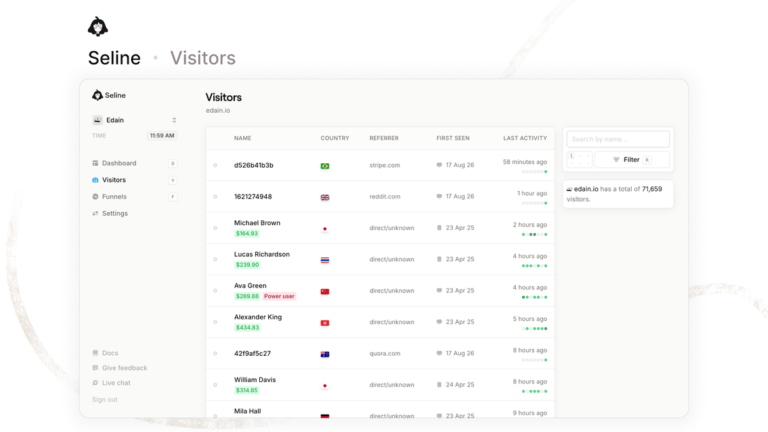
Beyond pageviews, Seline adds journeys with full session timelines, plus visitor profiles enriched with Stripe data and churn tags. Funnels support filters for checkout and onboarding analysis. Revenue attribution connects Stripe, Polar and Shopify orders to campaigns and pages. An AI chat answers data questions, and MCP support enables programmatic access. Details are on the official Seline site.
What Is Plausible
Plausible is an open-source web analytics tool licensed under AGPL. It focuses on essential metrics without cookies or personal data collection. The script is around 1KB and loads fast.
The dashboard covers pageviews, unique visitors, bounce rate, visit duration, sources, UTMs, pages and devices. Google Analytics import helps migration. Goals track signups, clicks and custom events.
Advanced features such as funnels, ecommerce revenue attribution and more granular segmentation sit on the Business plan. Cloud hosting is EU-based, and technical teams can self-host for full control. The model suits publishers, blogs and teams that value simplicity and code transparency over product analytics depth.
Key Features of Seline
- Realtime dashboard with visits, sources, UTMs, pages, devices and Live View
- Journeys showing full session timelines across pages and events
- Visitor profiles with Stripe data, churn tags and history
- Filtered funnels for signup, trial and checkout analysis
- Revenue attribution for Stripe, Polar and Shopify orders
- AI chat for natural-language questions plus MCP access
- 2KB cookieless script with GDPR EU hosting, adblock bypass and bot detection
- Unlimited sites and shareable dashboards for teams and clients
These features map to SaaS reporting needs. Traffic, product behavior and revenue stay in one place. That reduces export work and helps link marketing spend to subscriptions.
Key Features of Plausible
- Lightweight 1KB script with fast page loads
- Simple dashboard with visits, pageviews, bounce rate and duration
- Sources, UTMs, pages, devices and location reports
- Goals for signups, outbound clicks and custom events
- Funnels and revenue attribution on Business plan
- Google Analytics import for migration
- EU cloud hosting with cookieless GDPR tracking
- Open-source AGPL codebase with self-hosting option
This set suits content sites and small teams. Setup takes minutes, reports stay readable, and maintenance stays low. Shops that rely on deep customer timelines or Stripe-enriched profiles may outgrow its reports.
Compare Seline and Plausible Features Side by Side
Dashboard experience differs in scope. Seline loads a realtime view with visits, channels, campaigns, top pages and Live View. Filters slice by UTM, device, location and event without leaving the page. Plausible shows a calmer overview with visits, pageviews, bounce and duration plus sources and top pages. Both load fast, but Seline packs more SaaS context per screen while Plausible stays closer to classic site stats.
Journeys and profiles are the clearest gap. Seline records session timelines that show entry page, navigation path, events and conversion. Profiles aggregate repeat visits and attach Stripe customer data with churn tags. Support and growth teams can trace a cancelled account back to acquisition source and onboarding steps. Plausible focuses on aggregate behavior and goals, which keeps reports private and simple but leaves customer-level questions unanswered.
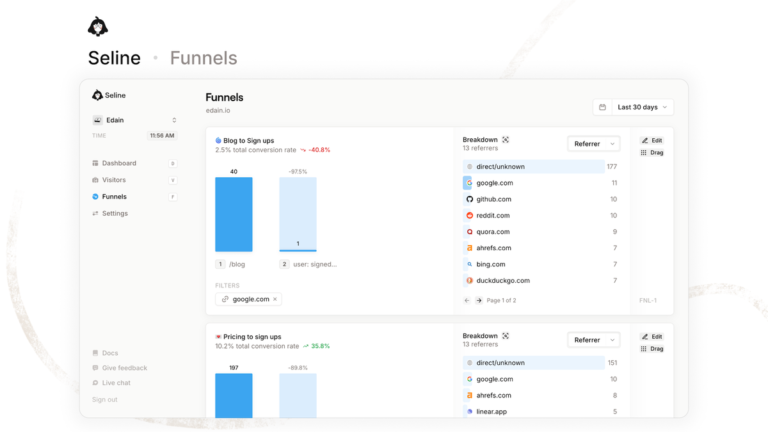
Funnels and revenue show a similar pattern. Seline includes filtered funnels in the core product and ties completed checkouts from Stripe, Polar or Shopify to traffic sources and pages. SaaS teams can compare plan tiers, coupons and campaigns by actual revenue. Plausible offers funnels and ecommerce revenue on its Business tier, which works for basic checkout tracking but adds cost and lacks Stripe profile enrichment.
Privacy and speed are strong on both sides. Seline uses a 2KB cookieless script, EU hosting, adblock bypass and bot detection. No cookie banner is needed in most setups. Plausible uses an even smaller script near 1KB, EU cloud hosting, cookieless measurement and an open codebase that auditors can inspect. Self-hosting gives Plausible an edge for strict data-control policies, while Seline leads on data completeness when blockers are common.
AI, API and agency workflows round out the comparison. Seline adds AI chat for questions such as which source drove most trials last week, plus MCP for automation. I walk through every module in Seline features explained. Unlimited sites and shareable dashboards help freelancers manage many clients under one account. Plausible provides a clean API, shared links and email reports, but caps Business plans at around 10 sites and offers no native AI analyst. High-volume portfolios often fit Seline better, while small open-source stacks favor Plausible.
Pricing Comparing Seline and Plausible
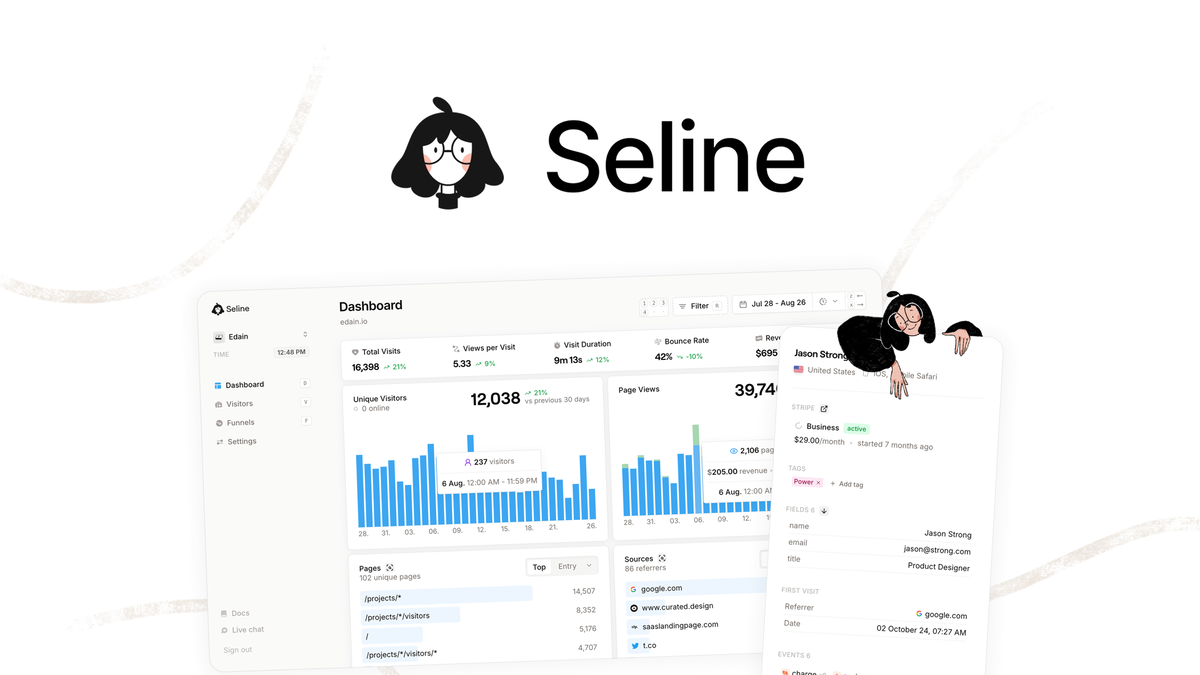
Seline sells both subscription and lifetime options. Plausible is subscription only, with self-hosting as the alternative for license-free use. The math below uses public list prices.
| Plan | Price | Limits |
|---|---|---|
| Seline Tier 1 lifetime | $59 was $170 | 25,000 monthly events, 3-year retention |
| Seline Tier 2 lifetime | $129 | 125,000 monthly events, 3-year retention |
| Seline Tier 3 lifetime | $289 | 275,000 monthly events, 3-year retention |
| Seline Tier 4 lifetime | $399 | 550,000 monthly events, 3-year retention |
| Seline Tier 5 lifetime | $599 | 1M monthly events, 3-year retention |
| Seline Pro monthly | $14/mo | 25,000 events, ongoing subscription |
| Plausible Growth | From $14/mo | Scales past 10k views, up to 3 sites |
| Plausible Business | From $19/mo | Funnels, revenue, max 10 sites |
Break-even is straightforward. Seline Tier 1 at $59 replaces the $14/mo Pro plan for 25,000 events in about 4.2 months. Against Plausible Growth at $14/mo, Tier 1 pays back in about 4.2 months while covering higher event volume plus funnels and revenue. Higher Seline tiers suit stores and SaaS products above 100,000 events. Plausible self-hosting removes license cost but adds server time and maintenance. All lifetime tiers include a 60-day refund through the Seline deal page.
Why Seline Wins Over Plausible and Why Plausible Wins Over Seline
Seline wins for revenue-driven teams. Journeys, Stripe-enriched profiles, filtered funnels and Shopify, Polar and Stripe attribution connect ad spend to subscriptions. AI chat speeds answers, unlimited sites simplify portfolios, and adblock bypass preserves data. The lifetime deal caps long-term cost.
Plausible wins for simplicity and transparency. The open-source AGPL codebase, 1KB script and minimal dashboard reduce audit friction. Self-hosting gives full data control. Google Analytics import eases migration for blogs and docs sites that do not need customer timelines.
Each tool carries a different compromise. Seline is newer, founded in 2024, with a smaller ecosystem than Plausible. Plausible requires a Business plan for funnels and revenue and limits site counts, which raises cost for agencies and stores.
Final Verdict
Choose Seline for SaaS, subscriptions and ecommerce where traffic must tie to revenue. Tier 1 at $59 covers early products, Tier 2 at $129 covers growing stores, and higher tiers cover scale. Choose Plausible for blogs, docs and portfolios where simple cookieless stats and open-source control matter most. For scored hands-on tests, read my scored Seline review.
For most commercial teams comparing Seline vs Plausible, Seline delivers more decision value per dollar because funnels, journeys and revenue arrive without a higher-tier upsell. For minimalists and self-hosters, Plausible remains the cleaner fit.
Seline FAQs
Is Seline vs Plausible better for SaaS revenue tracking
Seline fits SaaS revenue tracking better because Stripe, Polar and Shopify attribution is built in. Profiles carry plan and churn tags, and funnels filter by source. Plausible tracks revenue only on Business plans without customer enrichment.
How does Seline vs Plausible differ on funnels
Seline includes filtered funnels for onboarding and checkout analysis at entry tiers. Steps can segment by UTM, page and event. Plausible offers funnels on higher Business plans, which suits basic flows but increases cost for growing teams.
Which is more private, Seline vs Plausible self-hosted
Both offer GDPR-friendly cookieless EU tracking without personal data collection. Plausible self-hosting gives full server control for strict compliance reviews. Seline counters with EU hosting, bot filtering and adblock-resistant measurement for more complete counts.
Does Seline vs Plausible support unlimited websites
Seline allows unlimited sites on paid plans with shareable dashboards for clients. Plausible Business plans cap at around 10 sites per workspace. Agencies with large portfolios often prefer Seline for simpler account management.
How do AI features compare in Seline vs Plausible
Seline includes AI chat for natural-language queries plus MCP access for automation. Teams can ask for top trial sources or funnel drops. Plausible provides API access and scheduled reports but offers no native AI analyst at this time.
What is the cheapest way to start with Seline vs Plausible
Seline Tier 1 costs $59 one-time for 25,000 monthly events with 3-year retention and a 60-day refund. Plausible starts near $9/mo for 10,000 pageviews. High-traffic SaaS products reach break-even on Seline within months.



One Comment
Comments are closed.